How to Get Rid of Baby Spiders Reef Shark
six Symbiotic Relationships in Coral Reef Ecosystem
Coral reefs are habitation for many organisms such as sponges, fish including large nurse sharks and reef sharks to groupers, clownfish, eels, snappers, and parrotfish, jellyfish, anemones, crustaceans, other invertebrates and algae. So, how do coral reefs back up such a huge weight on their shoulders? It is the symbiotic relationship that is formed when two dissimilar species interact with each other. These interactions create a balance within the ecosystem because at least ane of the species is gaining from it. The other species may also proceeds from the human relationship, exist unaffected or even go harmed from the relationship. Symbiotic relationships are very common in the ocean, especially near coral reefs. In that location are three chief types of symbiotic relationships. They are mutualism, parasitism, and commensalism. Mimicry is as well frequently seen amongst coral reef organisms.
Types of Mutualism:
In that location are 2 primary types of mutualism: obligate mutualism and facultative mutualism.
Mutualism, or a mutualistic relationship, by definition, is when two organisms of unlike species work together so that each is benefiting from the relationship.
- Obligate mutualism is when neither organism can live without one another.
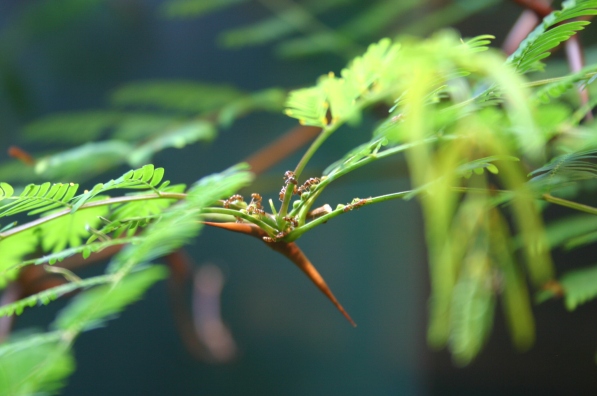
An example of obligate mutualism is the human relationship between ants and Acacia plants. While the plant provides shelter and food for the ants, the ants actually defend the institute from organisms such as other herbivores that may eat the plant, as well as remove whatsoever other species of plants that may limit the plant'southward growth.
A more specific example of obligate mutualism that is more related to this topic would be the relationship betwixt difficult coral and algae (zooxanthellae). The relationship between coral and zooxanthellae (algae), is one of the most important mutualistic relationships within the coral reef ecosystem. Zooxanthellae are microscopic, photosynthetic algae that reside within the coral. The hard coral provides protection, as well as compounds needed for photosynthesis to occur. In return for their protection for herbivores and other organisms, zooxanthellae photosynthesize organic compounds from the sun, and then pass the nutrients, glucose, glycerol, and amino acids, which are the products of photosynthesis, to their coral hosts, essentially giving the coral reefs their cute colors. The corals then use those nutrients to produce proteins, fats, carbohydrates, and calcium carbonate. This is and then important, in fact, approximately 90% of the nutrients produced during the photosynthesis in zooxanthellae is transferred to the coral for their use. Zooxanthellae also aid in the excretion, or removal of waste matter such as carbon dioxide and nitrogen. Ultimately, without algae, coral would starve to death (coral bleaching), and if algae didn't have protection, they would be more vulnerable to several herbivores and other organisms. This relationship is and then of import, that if this mutualistic relationship did non exist, it would be very likely coral reefs would not even exist. Therefore, making this relationship obligate mutualism, as mentioned before.
The mutualistic relationship between anemones and clownfish is also another normally known relationship. Clownfish are plant in warmer waters of the Indian and Pacific oceans. Of the over i,000 anemone species that alive in the ocean, only ten species coexists with the 26 species of tropical clownfish. Within these species, merely select pairs of anemone and clownfish are compatible. Sea anemones are actually predators, with stinging polyps, that attach themselves to rocks, the ocean floor, or fifty-fifty coral. They patiently wait for fish to swim by close plenty to go entangled in their poisonous tentacles. The toxins paralyze their prey, and the tentacles guide the prey into the anemone's oral cavity. Notwithstanding, clownfish are the exception and actually call the anemone home. Clownfish are coated with a mucus layer that substantially makes them immune to the deadly sting of the anemone. Therefore, clownfish are able to live within the anemone's tentacles, while also gaining protection from predators, and the clownfish helps feed the anemone by either letting them swallow their leftovers, or by also luring fish over to the anemone, then that the anemone tin can catch them with their poisonous tentacles, and eat them for dinner (or maybe luncheon).
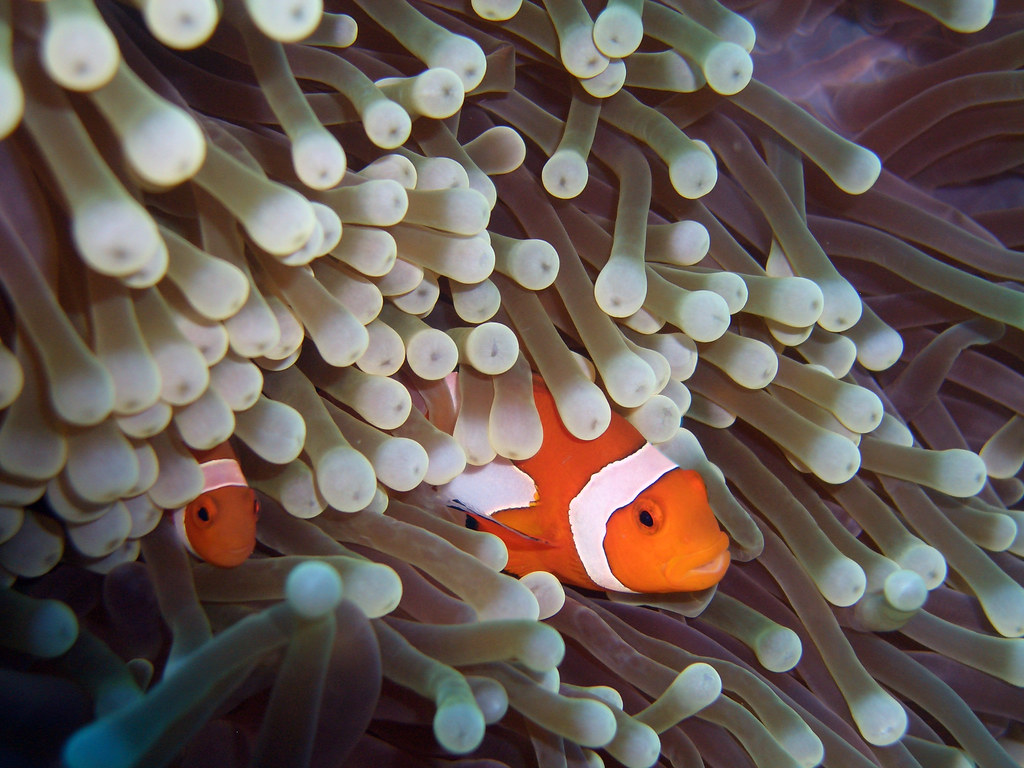
"Clownfish and Sea Anemone" by Samuel Grub under Flickr
- Facultative mutualism the other type of mutualism, is when species benefit from one another, merely do not necessarily fully depend on one some other.
An example of facultative mutualism is the relationship betwixt certain types of our gut bacteria, or the bacteria that live in our digestive tracts, and us humans. When we consume nutrient, bacteria use some of the nutrients from that food we are really digesting, and in return, they help us digest our food.
Once more, a more specific example of facultative mutualism that is more so related to the coral reef ecosystem, is the human relationship between shrimp or smaller fish and large marine organisms. The shrimp or cleaning fish remove materials, such as parasites, off of the larger marine organisms, in which they get a meal from, and the larger marine organisms have potentially harmful parasites removed!

As mentioned before, earlier on in the mail service, smaller fish or cleaner shrimp, such as the Bluehead Wrasse or Spanish Hogfish remove parasites and other materials off larger marine organisms such every bit fish, sharks, and rays. In most cases, these smaller fish would typically be the larger marine organism'due south casualty, however, in this instance, these larger organisms gain the benefit of having these parasites removed, that could potentially cause harm, while the smaller fish or shrimp get a repast.
Cleaner fish and larger fish share a mutualistic human relationship. This is because the cleaner fish eats harmful parasites and other small sources of food off of the large fish. This gives the cleaner fish a meal, the larger fish is helped because information technology no longer has these parasites on them. Often times larger fish wait in "cleaning stations" for the cleaner fish to come and get these things off of them. Some small shrimp can likewise be cleaners. The picture beneath shows a cleaner shrimp cleaning a big fish at a cleaning station that would normally consume the shrimp if it wasn't for this mutualism.
 "Unsafe DINING" By CHRIS LEWIS Nether VIMEO
Another facultative mutualistic relationship is betwixt the root-fouling sponge chosenTedania inis, and red mangrove calledRhizophora mangle. In this relationship, the red mangrove provides the sponge with carbon that was produced by the mangrove, and the nitrogen the sponge releases gets eaten up by the mangrove to enhance growth.
Mutualism also occurs between spider crabs and algae. This relationship benefits both of these species because the green-brown algae live on the spiders back, which helps the spider crab blend into the shallow areas of the ocean floor where they live. In return, the algae benefit from a practiced place to live.
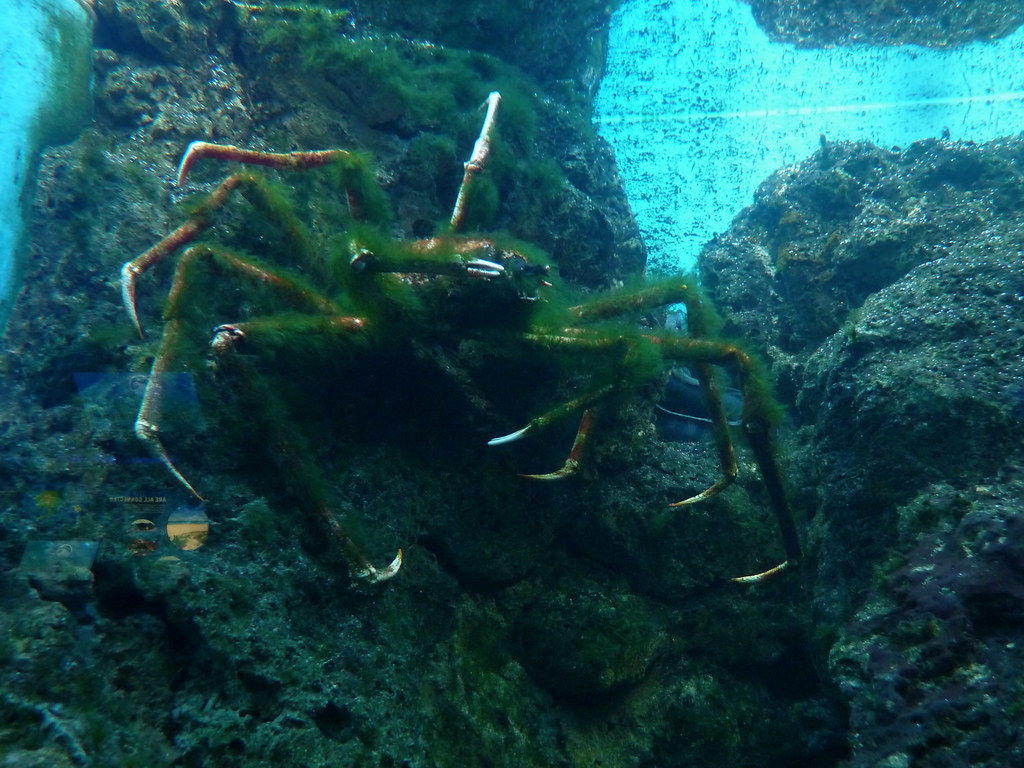 "JAPANESE SPIDER CRAB" BY (OVO) Under FLICKR
Another example is the relationship betwixt the Boxer Crab and anemones. In this relationship, the Boxer Crab carries around 2 anemones that sting and it uses them for protection. The anemones are benefited because since the crab carries them around, it allows them to be mobile which increases their options for finding nutrient.
 "BOXING (POM POM) CRAB" BY LIQUIDGURU Nether VIMEO
One terminal mutualistic relationship is the relationship between a goby (Nes Longus and Ctenogobius saepepallens) and a snapping shrimp (Alpheus floridanus). The shrimp dig a decent sized burrow in the flooring of the bounding main, and the goby volition then alive in the entrance of that burrow. When the shrimp exits the burrow, information technology will stay in contact with the goby through its antennae, and depending on the species of the goby, it will either point to the shrimp of approaching predators by darting headfirst back into the burrow or by flicking its caudal tail. Ultimately, the goby gets a complimentary place to alive and hide from potential predators, while in return the shrimp gets a look-out individual while information technology hunts for nutrient!

Parasitism:
Parasitism is not a mutualistic relationship because only one of the species is benefited. The parasite gains from the relationship while the other species involved is harmed. Ectoparasites live on the outside of the host trunk, whereas endoparasites alive inside the host.
Ane case of a ectoparasitic relationship is between fish lice and minor fish hosts. The fish can exist killed if there are too many fish lice attached to information technology. The lice do good from the fish by feeding off of their bodily fluids.
Isopods can besides cause exist involved in a parasitic relationship. Some isopods will eat the fishes tongue and and then alive in the fishes mouth so they tin can swallow whatever the fish is attempting to consume.
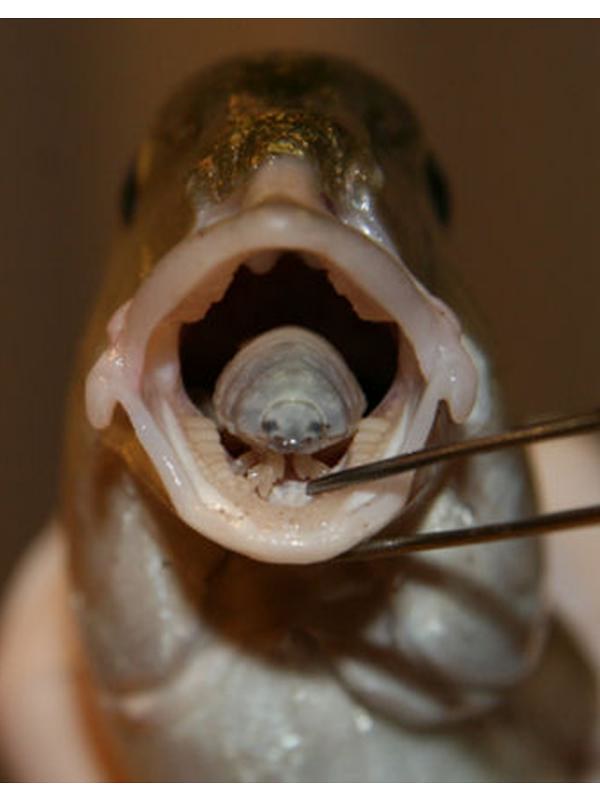 "BETTY IN Mouth" BY Academy OF SALFORD PRESS OFFICE UNDER FLICKR
Commensalism:
Commensalism is a human relationship where ane species benefits from another species. The other species is neither harmed nor helped in this relationship. At that place are many examples of commensalism in the ocean.
One example of commensalism among marine life is jellyfish and small fish. The small fish will typically hide inside of the jellyfish'southward stinging tentacles if the stinging does not impact them. The tentacles provide protection for the fish from larger predators. This relationship has no upshot on the jellyfish.

"Baby FISH Accept SHELTER IN JELLYFISH" Past Earth TOUCH NEWS NETWORK
Another relationship is betwixt shrimp and a featherstar. The shrimp volition blend in with the featherstar and apply it for protection. As y'all tin see in the flick beneath, it is very hard to find the shrimp hiding in at that place.
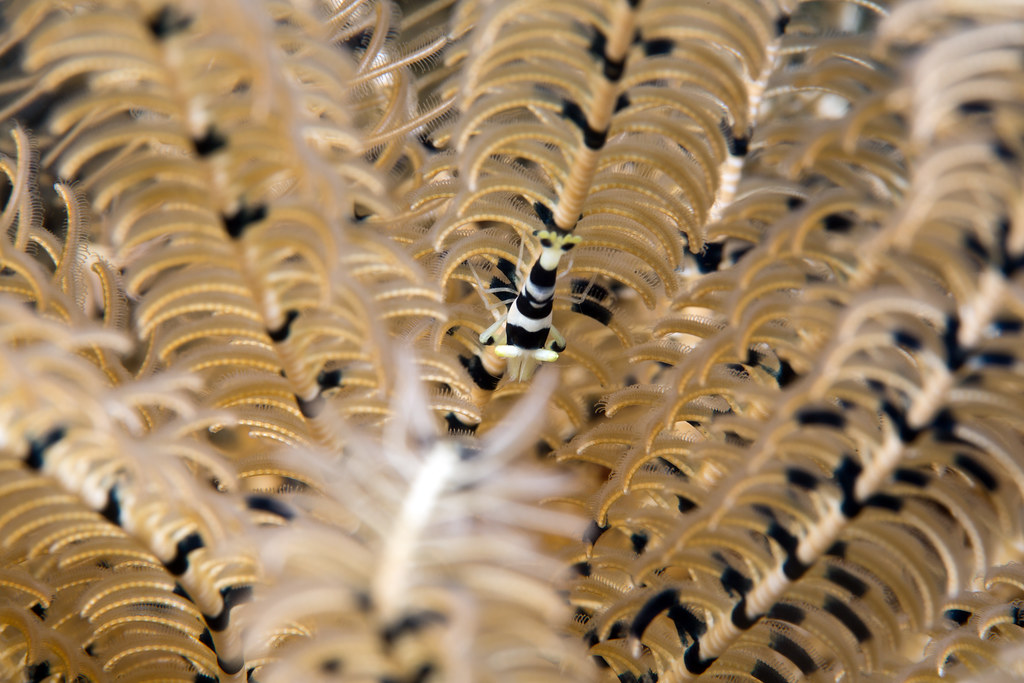
"Shrimp in Featherstar" by prilfish nether Flickr
Mimicry:
One blazon of Mimicry is when one organism that is harmless evolves to look similar to some other organism that is poisonous. This stops predators from eating them considering they think they are the poisonous species. They can too utilize mimicry to appear larger than they really are.
The four-eye butterflyfish uses a large eyespot in gild to appear larger to predators.
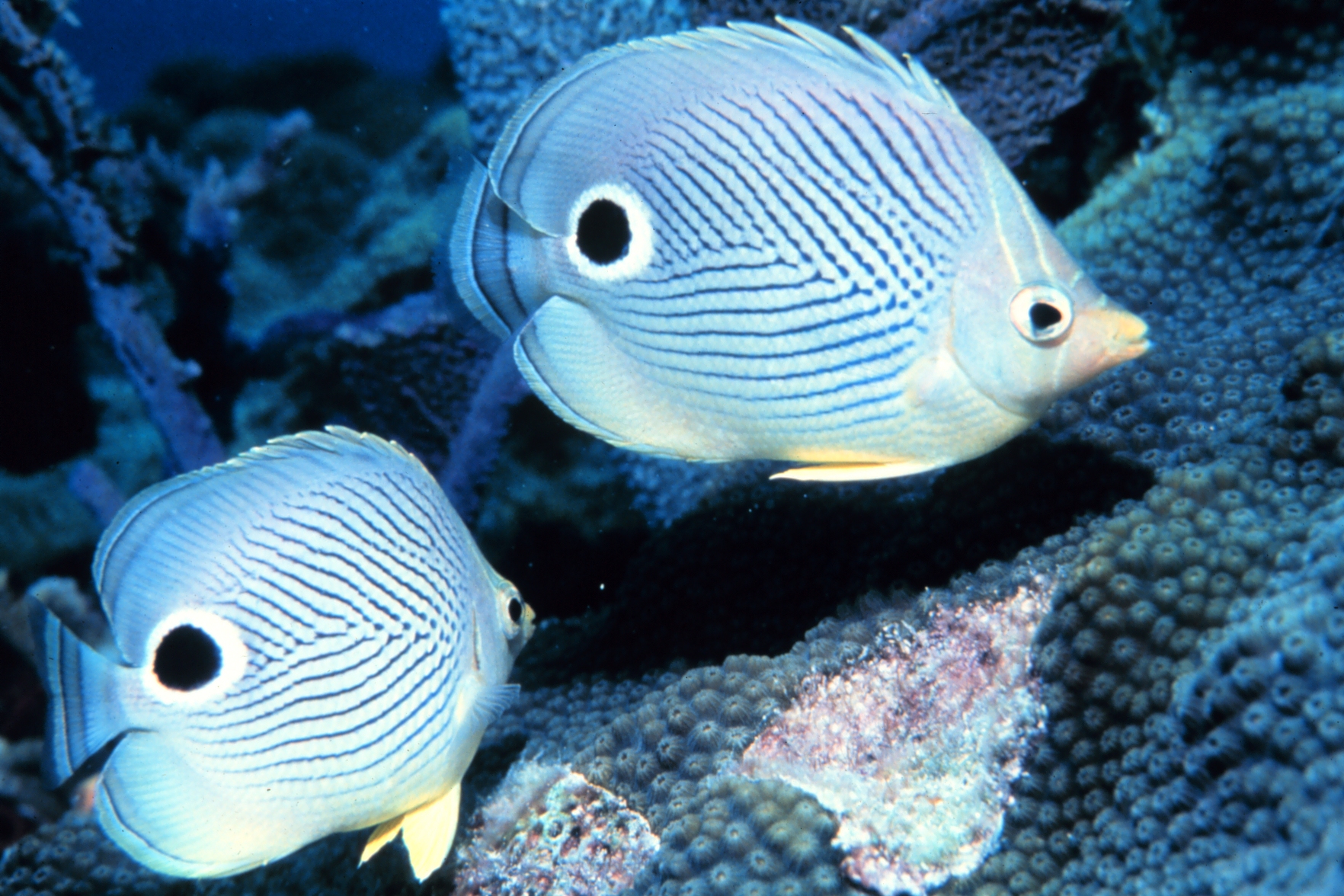 "CHAETODON CAPISTRATUS1" BY CHRIS HUSS Under PUBLIC DOMAIN
Another example of mimicry is between the Sabre-tooth Blenny and Cleaner Wrasses. The Cleaner Wrasse take a mutualistic relationship with larger fish so they don't get eaten, and the Sabre-tooth Blenny takes advantage of this human relationship by evolving to look very like to the Cleaner Wrasse. Instead of cleaning the larger fish, the Sabre-tooth Blenny volition take a bite out the the large fish's flesh and swim away. This is an example of ambitious mimicry.
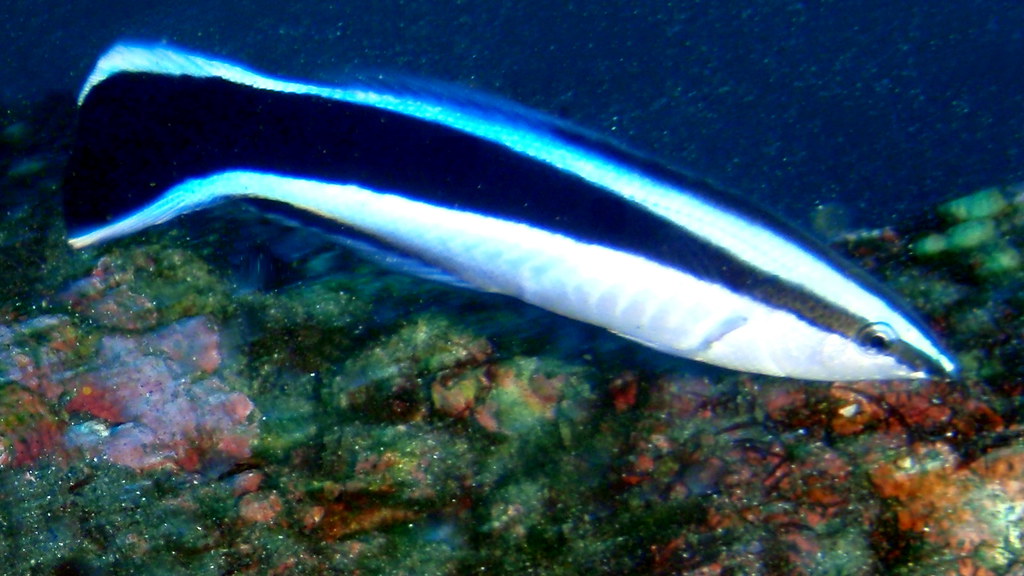

"BLUESTREAK CLEANER WRASSE" By NEMO'Due south Great UNCLE UNDER FLICKR "SABRE-Tooth BLENNY" BY FISH INDEX
On the top, at that place is a Bluestreak cleaner wrasse and on the bottom is a sabre-tooth blenny. Yous can run across how like they look and how fish could mistake them.
What'south the Big Deal?

Mutualistic relationships, whether obligate or facultative mutualism, are an integral part of sustaining a coral reef ecosystem, and without them, the coral reefs would simply not be. These mutualistic relationships ascertain a largely intricate number of connections and relationships which deeply rely on i other, and where one could beginning to deteriorate, some other could also. It is more than important at present than ever that we sustain healthy coral reefs to support these intricate relationships, communities, and ecosystems.
The data in this chapter is thanks to content contributions from Jaime Marsh, Christian Paparazzo, and Alana Olendorf
Source: https://tropicalmarinebio.pressbooks.com/chapter/mutualism-in-coral-reef-ecosystem-mutualism-in-coral-reef-ecosystem/
0 Response to "How to Get Rid of Baby Spiders Reef Shark"
Post a Comment