Temperature at Which Beef Fat Renders
We've established that french fries fried in beefiness tallow are more than delicious than those fried in, say, peanut oil. Only how does ane come by beef tallow? It's non readily available in stores like it was in our grandparents' day. Yes, you can purchase information technology online, and if you're fortunate, yous tin can buy some from a local producer at a farmers' market place. But if y'all don't have access to those resources, what are y'all to do? Well, make your own.
What is tallow?
To begin with, tallow is the rendered fatty of mutton or beef, though in American parlance, it almost exclusively refers to beef. It is a high fume-point oil that is highly saturated, with a rich flavor. It was used for generations in deep-fry applications until the cholesterol scare of the 1980's put an end to its widespread utilise.
Why use beef tallow for frying?
Every bit we've already said, beef tallow makes delicious foods when used for deep frying. Only it also has temperature advantages. We have plant that beefiness tallow has a higher heat capacity than peanut oil, pregnant it can exercise more rut-work per degree than peanut oil. Plus, beef tallow is high in niacin, which is i ot those "recommended vitamins and minerals" yous're already not getting enough of, so that's nice.
Another reward that beefiness tallow has over vegetable oils is its longevity. Beef fatty is a highly-saturated fat, which is why it solidifies at room temperature. Simply saturation provides a longer life for the oil. According to Dr. Oscar Pike, a food scientist at Brigham Young University who specializes in oils, information technology is theunited nationssaturated fats in oils that break down after repeated heating and cooling. A highly saturated fat like beefiness tallow isn't as susceptible to useage-decay as, say, soybean oil.
Equally long every bit it's stored properly in an airtight container—preventing oxidation—beefiness tallow volition be practiced for many uses before you have to replace information technology.
What fat to utilise to return beef tallow
To starting time with, you will need some beef fat. Most grocery store meat departments (if they accept in-house meat cutters) will save beefiness fat for yous if you permit them know in advance that y'all'll exist wanting some. What they give you will be fat from prime number rib roasts, T-bone steaks, and other various cuts. Inquire them to run it through the grinder for you, and it will practise okay. Simply, according to traditional recipes and some showtime-hand experience, the best tallow comes from beef suet.
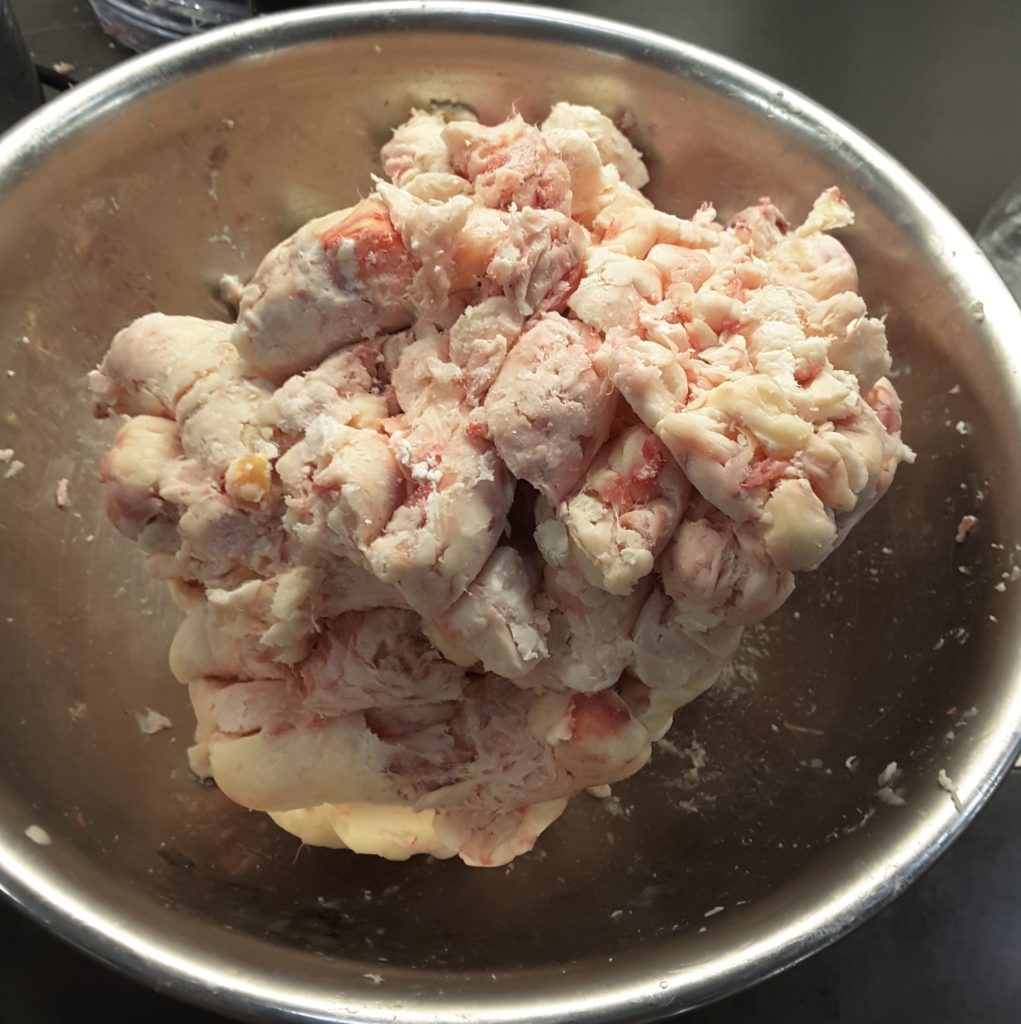
Suet is the clumpy, nigh cake-y fat that surrounds the kidneys. It hides beneath the loins of the cow. If you tin get suet from a grocery store meat section, bully for you. I had to become to a local slaughter-house/slaughter-house to become mine. It actually is worth getting the suet for a purer, better tallow. I however propose asking the butcher to run information technology through the grinder, though.
Rendering beefiness tallow
- If the butcher has not ground your tallow, yous will need to. Working in modest batches, pulse the tallow in a food processor until finely minced. I recommend holding the pulse button while dropping a few pieces of tallow through the feeder chute at a time.
Annotation: be certain your suet iscold—every bit in partially frozen. It is soft and will mucilage up in the car when warm.
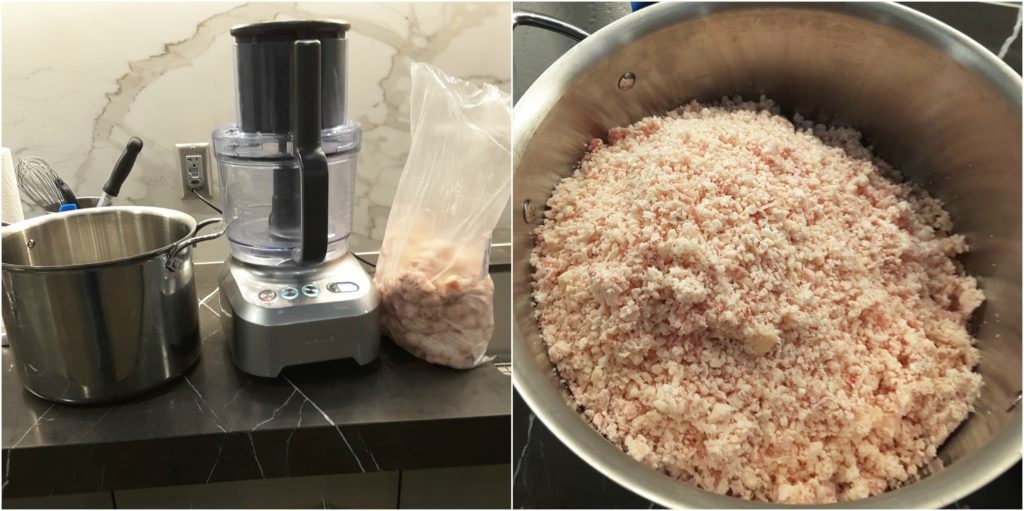
- In one case all your tallow is footing, put it in a big pot and add enough hot water to peek through the tallow's surface. Put the pot on a stove and plow the heat to high. The goal is to melt the proteins in the beef suet so that they don't stick to the pan or each other while simultaneously starting to return the fat from the cells.
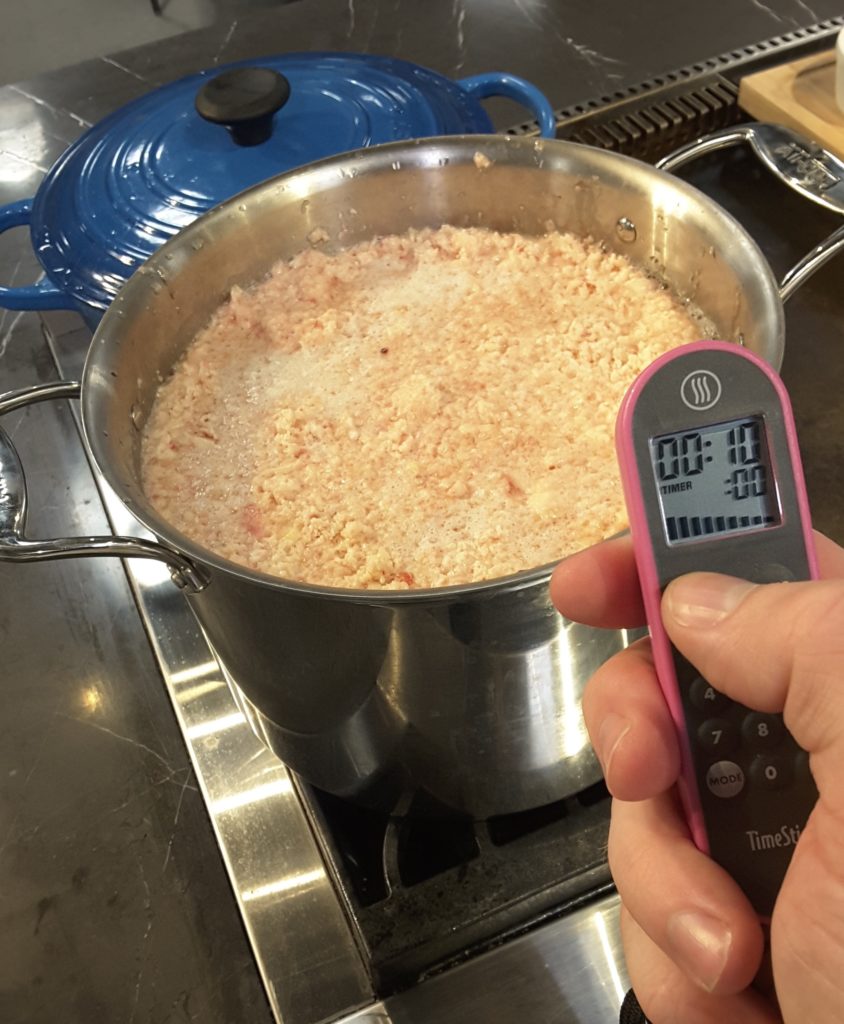
- Bring the h2o in the pot to a heavy simmer and kickoff scooping the scum off that forms on the surface. Stir the suet so that it is all swimming freely and tin cook.
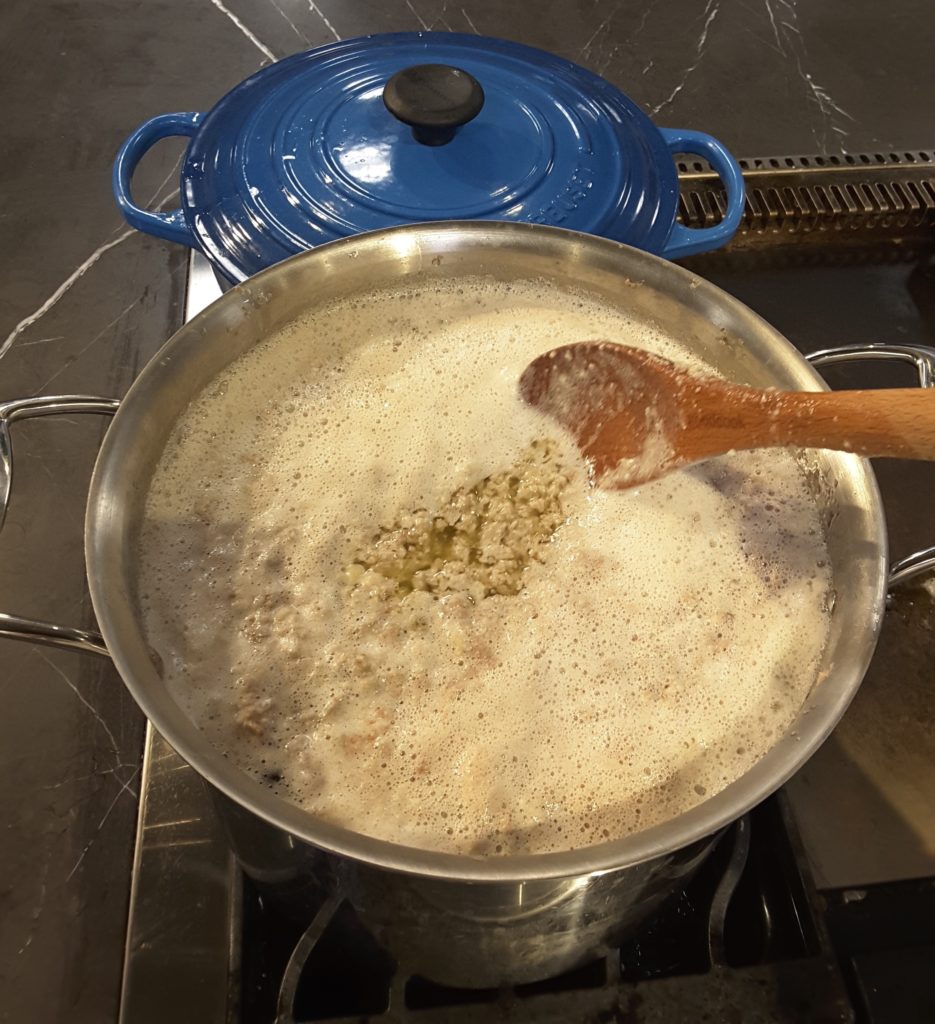
- Once the pot stops producing copious scum, allow it go at a high simmer.Y'all'll want to keep an eye on information technology, but it doesn't need to exist tended to constantly. Check on it from time to time to make certain it isn't boiling over, clumping also much, or sticking to the bottom—get a TimeStick ® and set up information technology for 10 minutes, check on it, reset for x minutes, etc. You're going to cook all the water out of the pot and out of the fat tissues. This will take some time!
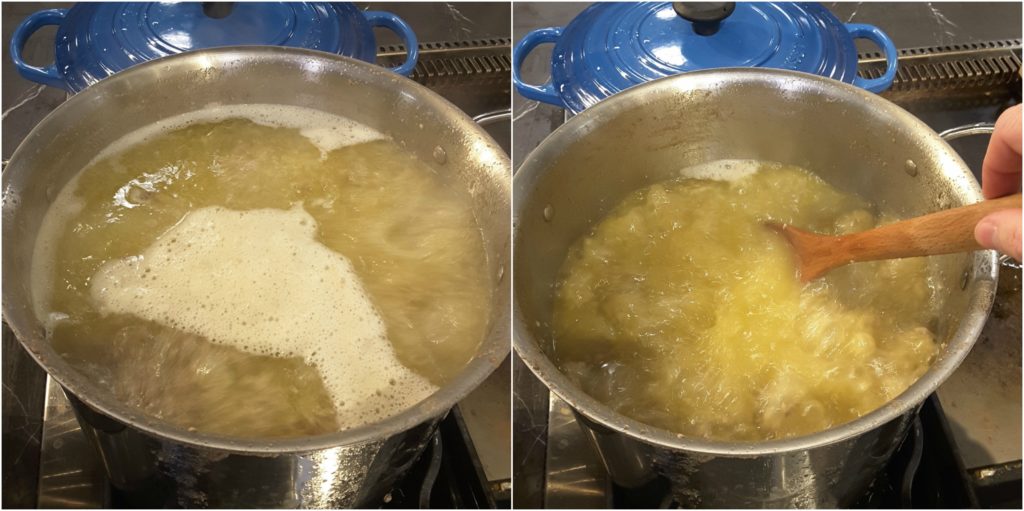
- Over time, you will notice a moving-picture show of fat floating on the water which will get thicker and thicker. Don't worry, this looks aught like the cream layer. It volition await like you poured, well, oil in the pot. The simmering will be just what you wait. Adjust the flame to avoid humid it too quickly, which can lead to boil-overs.
- After an hour or so, depending on how much fat you started with, you will notice a change in the sound of the boil—which will accept a deeper, more than gurgle-y bubble to it—and you lot will run across even more fatty on the surface of the water. This will hateful that you are starting to run low on h2o. Turn the heat downward a piffling fleck and ready the timer for 10 more minutes.
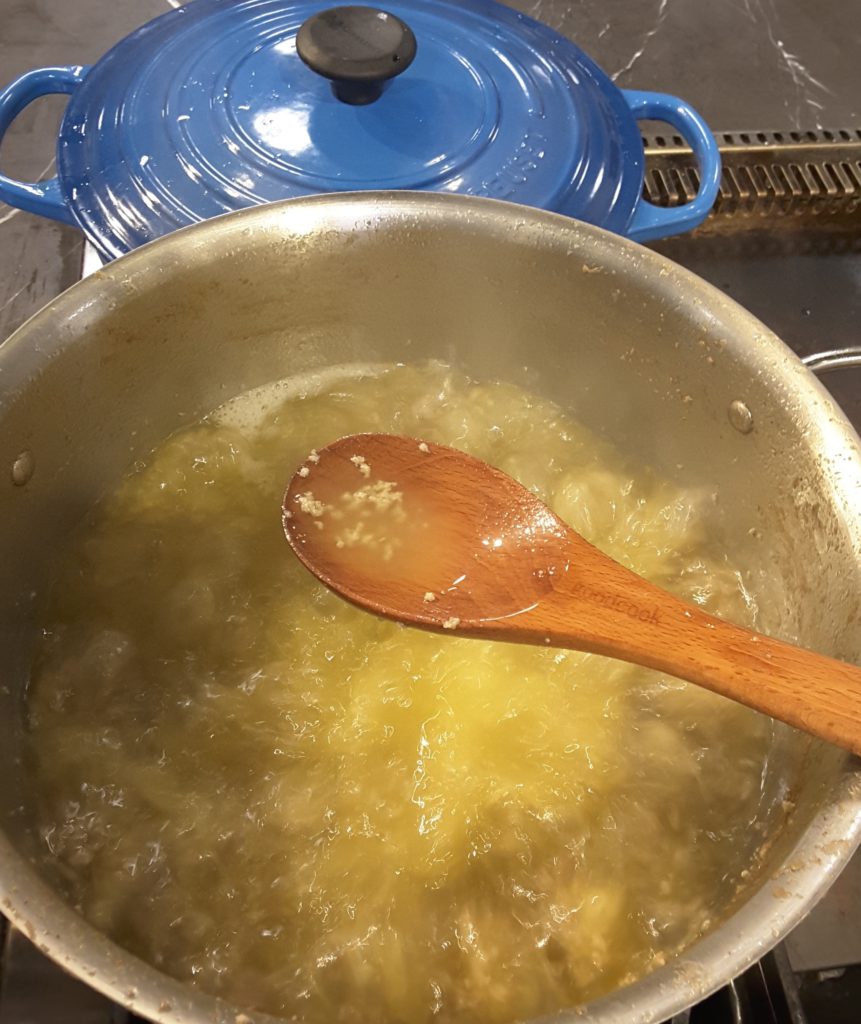
- Requite the tallow a stir, scraping the bottom. If any bits are sticking to the bottom, scrape them up to forestall burning. This is when paying attention becomes more important. As the water dries out and the pot is filled more than and more with rendered fat, those bits are going to start cooking to the bottom of the pot. A flat-nosed wooden spatula is a great way to go along that from happening.
- The bubbles in the pot will outset to become smaller and more oily looking every bit the water cooks out. At present you lot'll want to catch a Thermapen ® and start spot checking the temperature. As the water cooks out, the temp in the fatty will start to ascent. As it passes 212°F (100°C), the h2o in the little bits will start to sizzle out, creating very small bubbles all over in the pot. We want to melt the fat to 230°F (110°C). This temperature ensures that nosotros've cooked a expert bargain of the water out of the fat bits, but isn't so loftier that we've started to crisp and brown them, thus tainting the oil with denatured proteins. Keep scraping the bottom of the pan with your wooden spoon throughout this process!
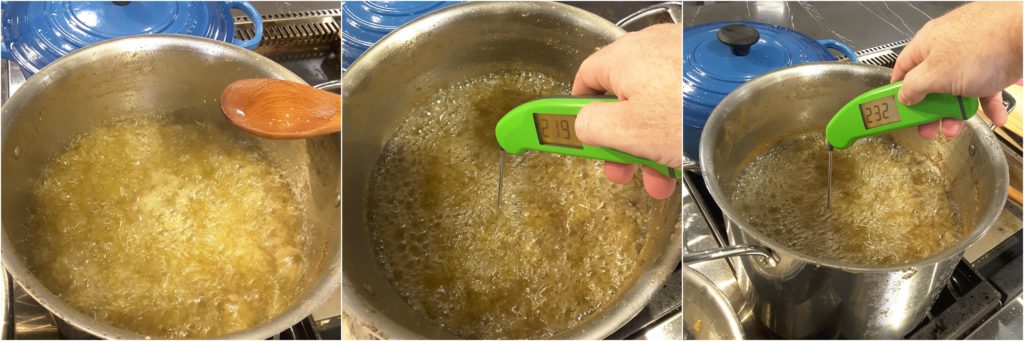
- Once you reach230°F (110°C) kill the heat on the oil and allow information technology absurd for a half hour or more. The compact $.25 will settle to the bottom and you tin can strain the oil through a fine-mesh sieve or some cheesecloth. Press out the $.25 to extract as much oil as possible.
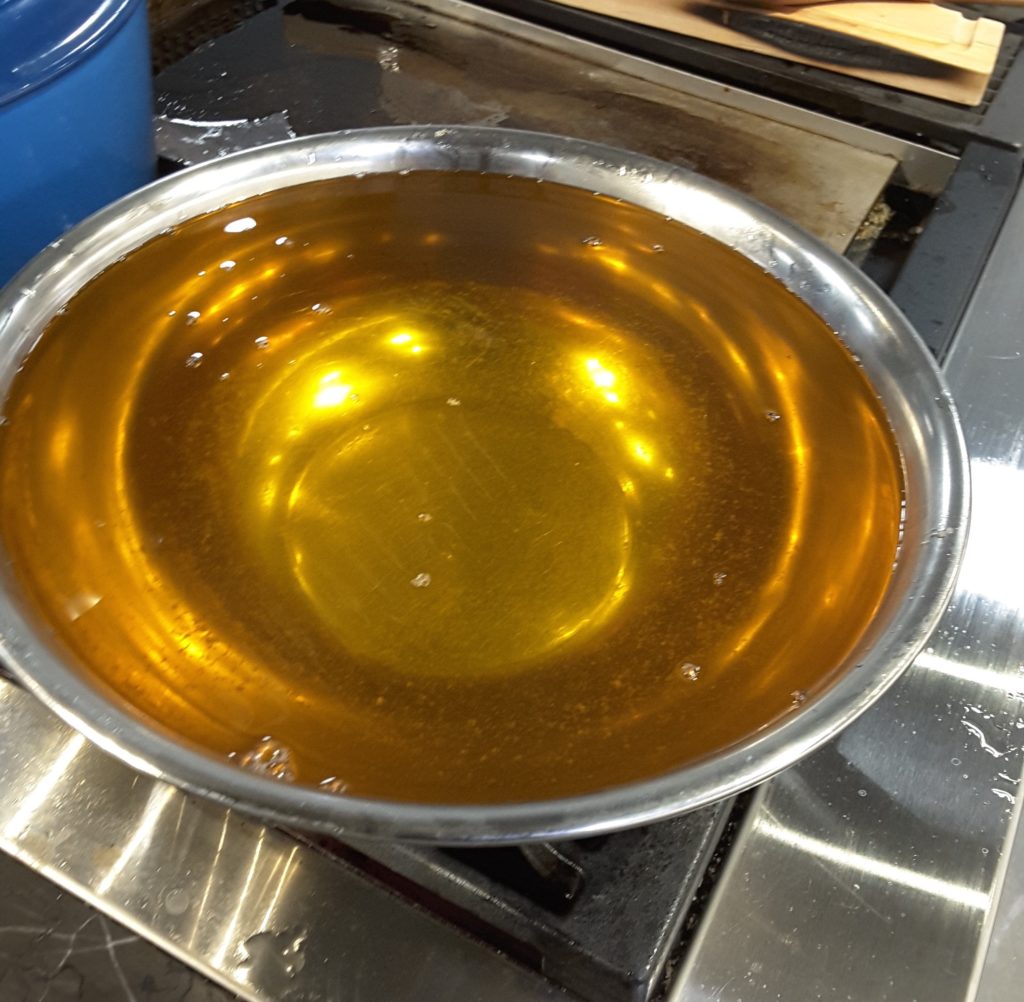
- Allow the oil to cool on the countertop. It will solidify and turn a cute buttery golden color. If yous desire to relieve it for later, you can freeze it; but fifty-fifty nether regular refrigeration, it will already last for months if not longer. If it ever smells like rancid beef, it'southward not adept anymore.
So there yous have it, a method for rendering your ain gilded, delicious beefiness tallow for deep frying, sauteeing, and any other loftier-temp cooking needs you may have. Use your TimeStick to keep an eye on things and a Thermapen® to make sure you cook it to the right temp, and relish!
If you'd like a great idea for what to practice with your tallow, use it for frying french fries!
 |  |
|---|
Products used:
 |  |
|---|

Source: https://blog.thermoworks.com/beef/how-to-render-beef-tallow/
0 Response to "Temperature at Which Beef Fat Renders"
Post a Comment