Chapter 18 the Life Cycle Continues
- Slides: 26
Download presentation
CHAPTER 18: THE LIFE CYCLE CONTINUES UNIT 6: GROWTH AND DEVELOPMENT
OBJECTIVES • Discuss adolescent changes that begin with puberty • Identify adulthood, marriage, and parenthood as stages of life • Learn how to maintain health through the life cycle
CHANGES DURING ADOLESCENCE Lesson 1
PUBERTY: A TIME OF CHANGE MAIN IDEA: Adolescents being moving toward adulthood during puberty • Adolescence: period between childhood and adulthood • Physical growth is the most noticeable change; gain height, change in voice and body's begin to fill out • Second fast stage of growth • Puberty: time when a person begins to develop certain traits of adults of his or her gender • Usually begins between 12 -18 • Testosterone, estrogen, and progesterone create the changes that affect teens
PHYSICAL CHANGES • One of the most important and significant body changes that occurs is the development of sex characteristics • Sperm and ova • Females: • Breasts develop, waistline may narrow, hips widen, body fat increases, menstruation starts • Males: • Facial hair appears, voice deepens, shoulders broaden, muscles develop, hairline recedes • In both: • Body hair appears, all permanent teeth grow in, perspiration increases
• Brain is changing as well MENTAL AND EMOTIONAL CHANGES • The cerebellum continues to develop during adolescence and increases memory and cognition • Cognition: ability to reason and think out abstract solutions • Can anticipate consequences of a particular action • Think logically • Understand different points of view
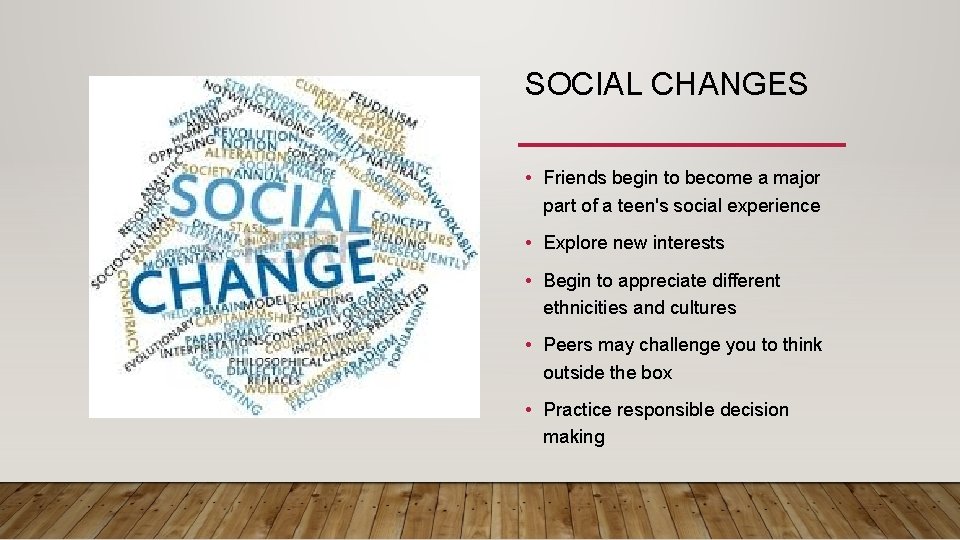
SOCIAL CHANGES • Friends begin to become a major part of a teen's social experience • Explore new interests • Begin to appreciate different ethnicities and cultures • Peers may challenge you to think outside the box • Practice responsible decision making
ACCOMPLISHMENTS IN ADOLESCENCE MAIN IDEA: Adolescents will develop independence, find their identity, and establish their personal values • Adolescence can be a wonderful, yet difficult time in life • During adolescence, one should be maturing • Achieving emotional independence from your parents • Establish career goals • Learn and practice healthful behaviors
ACCOMPLISHMENTS IN ADOLESCENCE • How to evaluate progress while going through changes: • Emotional and psychological independence • Personal value system • Vocational goals • Control over behaviors
ADULTHOOD Lesson 2
MATURING PHYSICALLY AND EMOTIONALLY MAIN IDEA: Adulthood is reached when both physical maturity and emotional maturity are achieved • Physical maturity: state at which the physical body and all its organs are full developed • Late adolescence to early 20 s • Emotional maturity: state at which the mental and emotional capabilities of an individual are fully developed • Positive values and goals
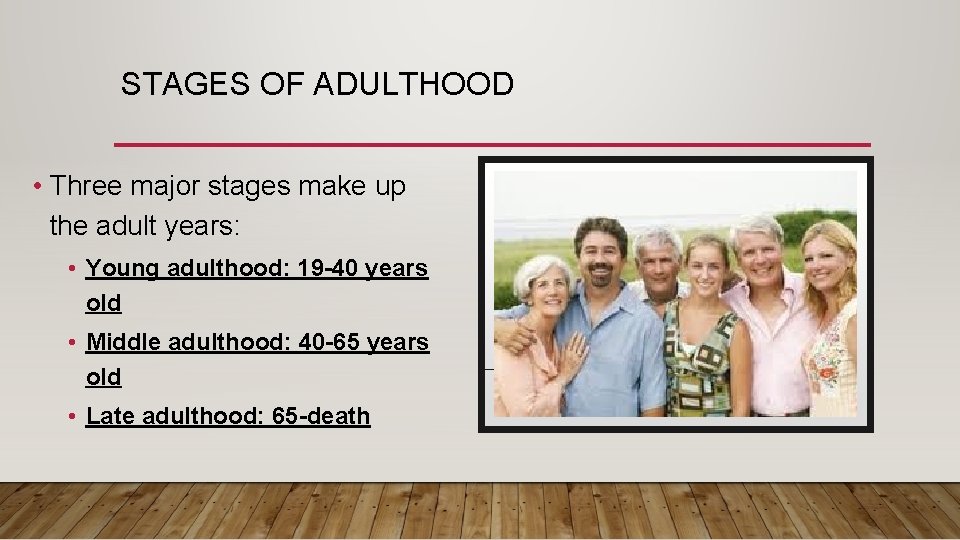
STAGES OF ADULTHOOD • Three major stages make up the adult years: • Young adulthood: 19 -40 years old • Middle adulthood: 40 -65 years old • Late adulthood: 65 -death
MARRIAGE • Many people marry because they fall in love and are ready to enter into a lasting and intimate relationship • When a couple agrees to marry, their relationship is considered serious and they make a deeper commitment • Consider long-term consequences • Successful marriage depend on the following: • Communication • Emotional maturity • Values and interests
RESOLVING CONFLICT IN MARRIAGE • Issues that can cause problems: • Spending habits • Conflicting loyalties involving family and friends • Lack of communication • Lack of intimacy • Jealousy, infidelity, or lack of attention • Decisions about having children and arranging childcare • Abusive tendencies or attitudes
PARENTHOOD • A married couple may decide to have children • Biological children • Adoption: legal process of taking a child of other parents as one's own • Foster children • Most parents find raising a child to be both challenging and rewarding • It is important to understand the changes in lifestyle necessary to raise a child
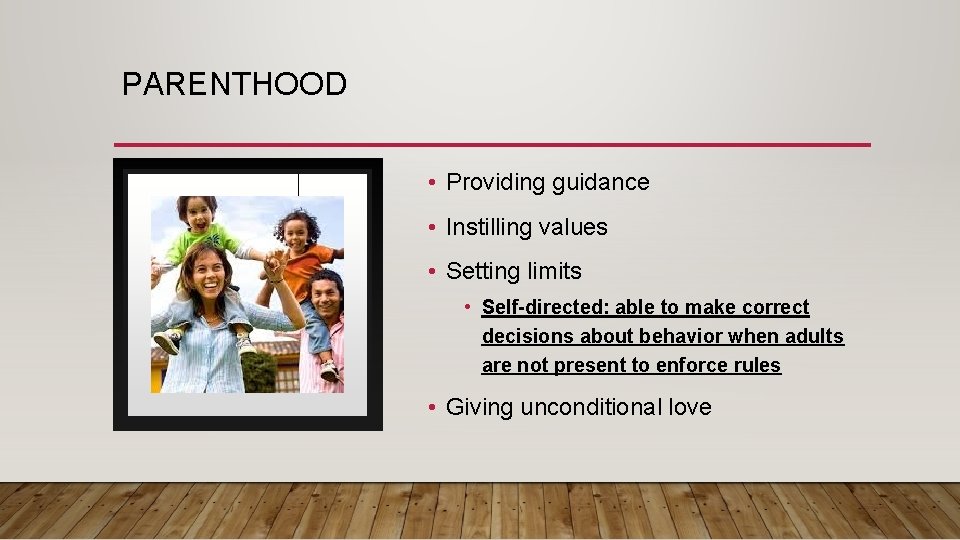
PARENTHOOD • Providing guidance • Instilling values • Setting limits • Self-directed: able to make correct decisions about behavior when adults are not present to enforce rules • Giving unconditional love
TEEN PARENTING • Financial difficulties • Restrictions on educational and career plans • Emotional stress • Limitations on social and personal life
HEALTH THROUGH THE LIFE CYCLE Lesson 3
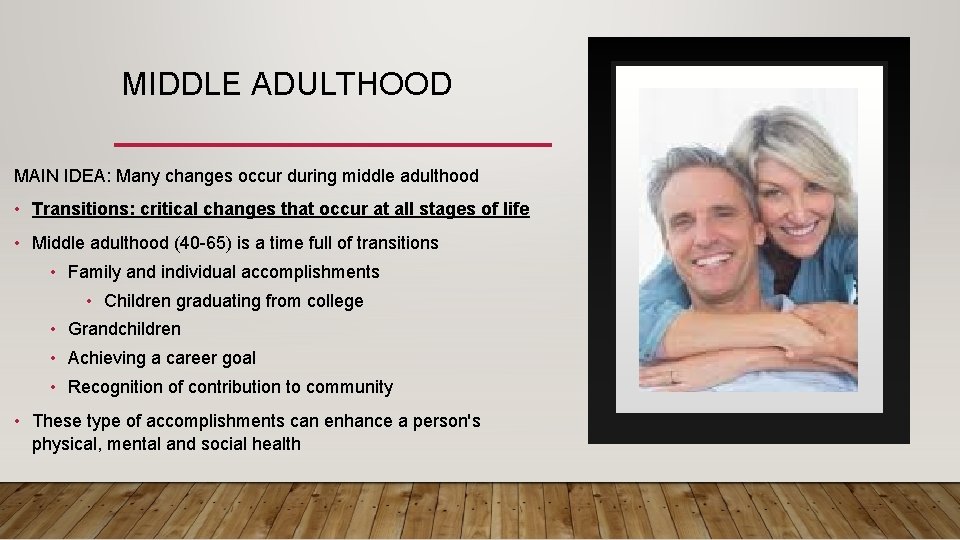
MIDDLE ADULTHOOD MAIN IDEA: Many changes occur during middle adulthood • Transitions: critical changes that occur at all stages of life • Middle adulthood (40 -65) is a time full of transitions • Family and individual accomplishments • Children graduating from college • Grandchildren • Achieving a career goal • Recognition of contribution to community • These type of accomplishments can enhance a person's physical, mental and social health
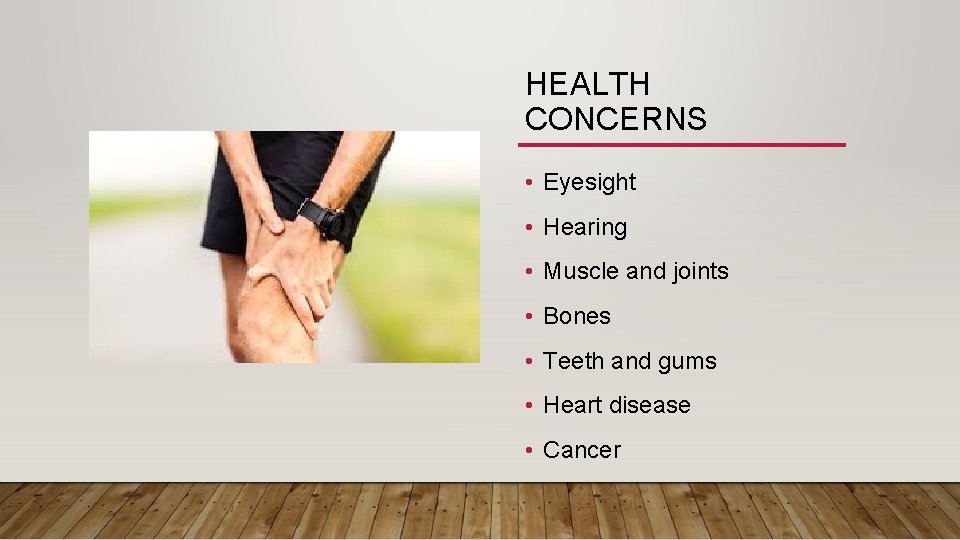
HEALTH CONCERNS • Eyesight • Hearing • Muscle and joints • Bones • Teeth and gums • Heart disease • Cancer
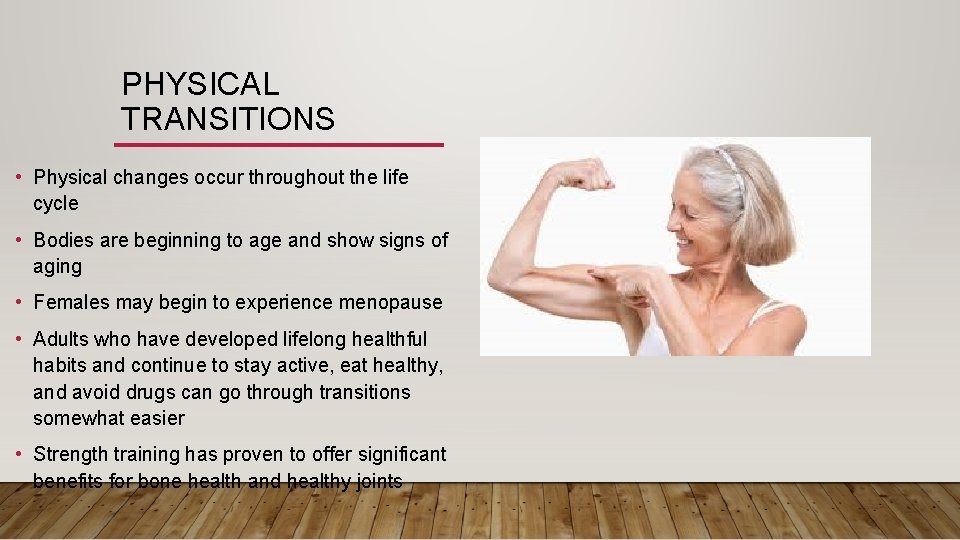
PHYSICAL TRANSITIONS • Physical changes occur throughout the life cycle • Bodies are beginning to age and show signs of aging • Females may begin to experience menopause • Adults who have developed lifelong healthful habits and continue to stay active, eat healthy, and avoid drugs can go through transitions somewhat easier • Strength training has proven to offer significant benefits for bone health and healthy joints
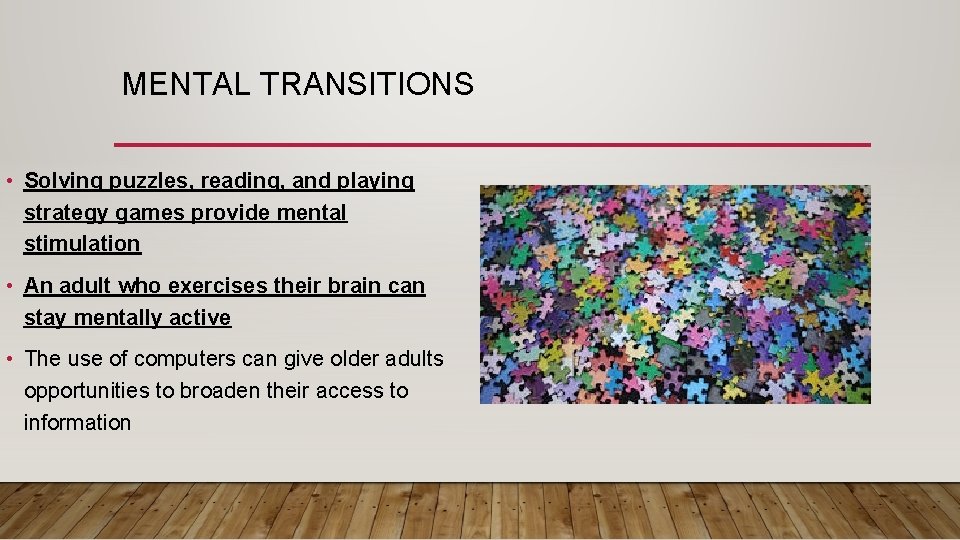
MENTAL TRANSITIONS • Solving puzzles, reading, and playing strategy games provide mental stimulation • An adult who exercises their brain can stay mentally active • The use of computers can give older adults opportunities to broaden their access to information
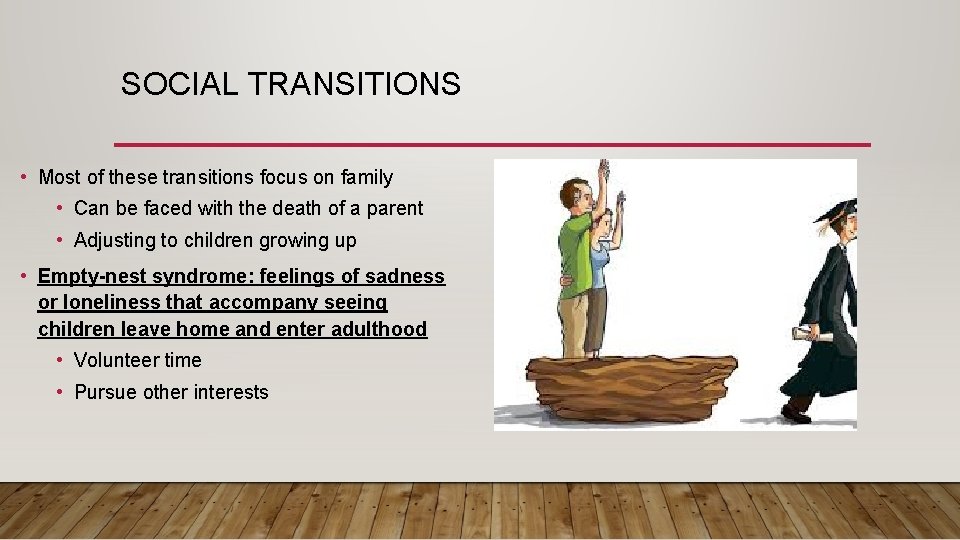
SOCIAL TRANSITIONS • Most of these transitions focus on family • Can be faced with the death of a parent • Adjusting to children growing up • Empty-nest syndrome: feelings of sadness or loneliness that accompany seeing children leave home and enter adulthood • Volunteer time • Pursue other interests
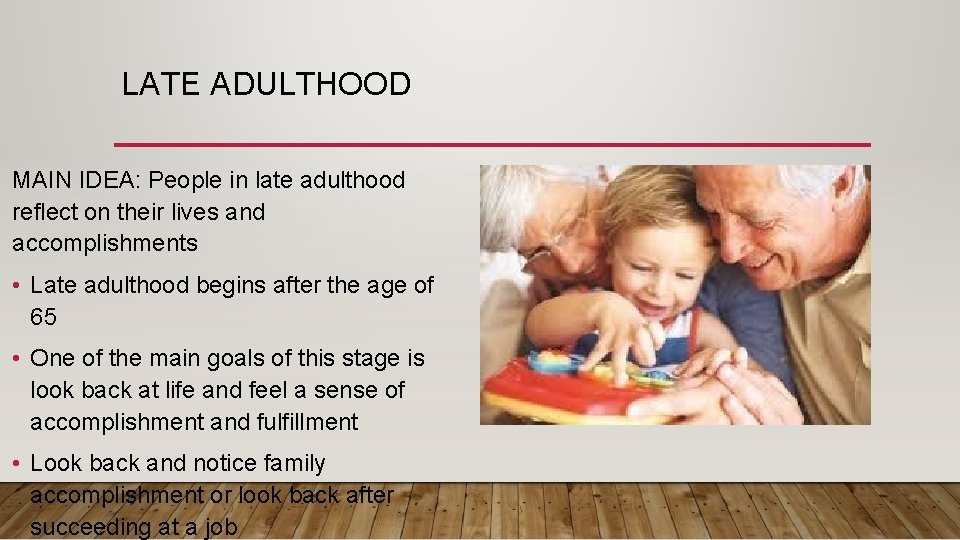
LATE ADULTHOOD MAIN IDEA: People in late adulthood reflect on their lives and accomplishments • Late adulthood begins after the age of 65 • One of the main goals of this stage is look back at life and feel a sense of accomplishment and fulfillment • Look back and notice family accomplishment or look back after succeeding at a job
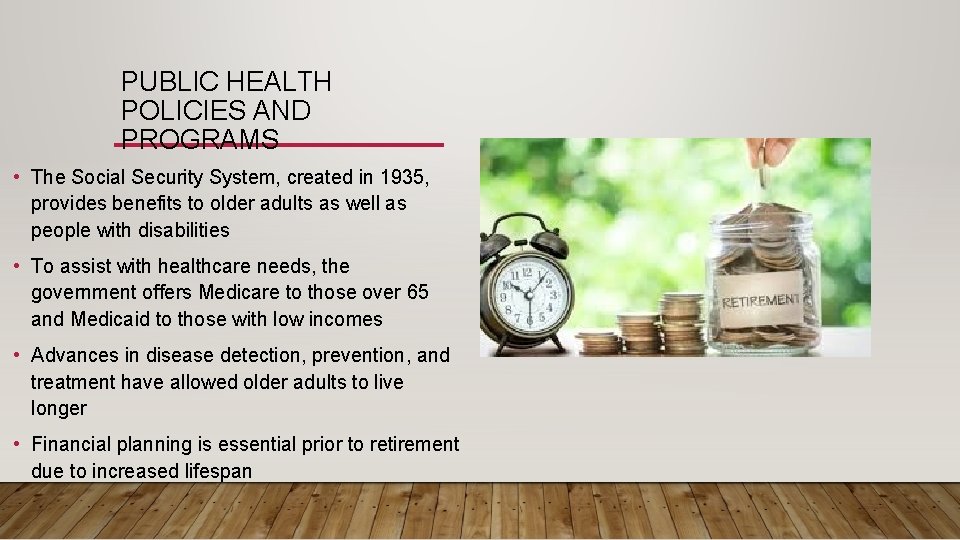
PUBLIC HEALTH POLICIES AND PROGRAMS • The Social Security System, created in 1935, provides benefits to older adults as well as people with disabilities • To assist with healthcare needs, the government offers Medicare to those over 65 and Medicaid to those with low incomes • Advances in disease detection, prevention, and treatment have allowed older adults to live longer • Financial planning is essential prior to retirement due to increased lifespan

REFERENCE • Florida Health
Source: https://slidetodoc.com/chapter-18-the-life-cycle-continues-unit-6/
0 Response to "Chapter 18 the Life Cycle Continues"
Post a Comment